Funny Cat and Duck SVG: A Designer’s Real-World Embroidery Review
First Impressions: Playful, Not Precious
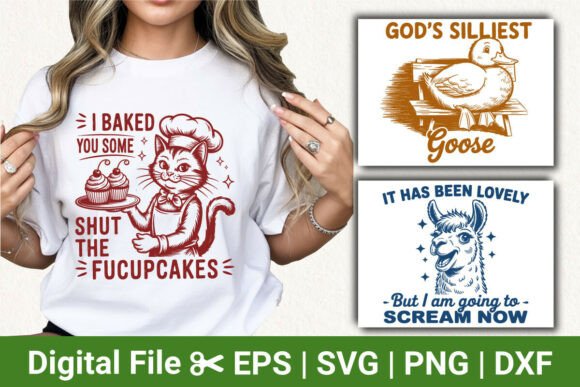
When I opened Funny Cat and Duck Svg, my first thought wasn’t “cute”—it was “relatable.” The cat looks mildly unimpressed, the duck is mid-waddle with zero apologies, and their shared expression lands somewhere between mischief and mutual exhaustion. It’s not overly detailed or fussy—no tiny whiskers to vanish in satin stitch, no delicate feathers that’ll blur into a fuzzy halo. That simplicity is its strength. As a machine embroidery design, it leans into bold shapes and clear silhouettes, which means it translates cleanly across fabric types and hoop sizes. I immediately pictured it stitched on a natural canvas tote for a local coffee shop’s staff gift—friendly but not childish, clever but not sarcastic.
Where It Shines: Real Projects, Real Fabric
I tested Funny Cat and Duck Svg as an embroidered patch for a linen apron (a staple in my small shop’s kitchen line). On medium-weight fabric with light cutaway stabilizer, the design held its shape beautifully—no puckering, no distortion. The curves of the duck’s body and the cat’s rounded ears stayed crisp thanks to balanced stitch density; no over-stuffing in the fill areas, no thin running stitches that might skip on thicker weaves. It worked equally well on a cotton sweatshirt—soft enough for baby embroidery, sturdy enough for daily wear. For Etsy sellers, this is gold: one digital embroidery file that supports multiple product categories—tote bag design, sweatshirt embroidery, baby embroidery, even holiday embroidery when paired with seasonal thread colors (think mint green duck + terracotta cat for spring, or navy + mustard for fall).
Why It Fits Boutique & Small Shop Branding
- Visual appeal without visual noise: Customers notice it instantly, but it doesn’t overwhelm handmade product photography.
- Giftability built-in: Its gentle humor reads well across ages—grandparents chuckle, teens nod, kids point. Perfect for personalized gifts like pillow covers or tea towels.
- Brand consistency anchor: Use it across your craft business as a recurring motif—on packaging tags, shop banners, or even as a subtle corner accent on embroidered blankets.
Where to Proceed With Care
This isn’t a one-size-fits-all embroidery file—and that’s honest, not limiting. On stretchy fabric like jersey tees, I recommend using tear-away + topping for clean satin stitch definition. On dark fabric, test thread colors thoroughly: a pale yellow duck can disappear against charcoal unless you add a white underlay (check if the embroidery file includes that layer—or be ready to build it). Tiny hoop sizes (<4”) demand attention: the duck’s beak and the cat’s eye are expressive but compact—don’t shrink below 3.5” without verifying clarity in a test stitch. And while it’s labeled as a T-Shirt Design, remember—it’s not inherently optimized for direct-to-garment printing. As a graphics asset, it’s vector-based and scalable, but for embroidery, always confirm stitch count and density before scaling down for caps or curved surfaces like bucket hats.
Design Notes Every Embroidery Professional Should Run
- Test on scrap fabric *first*—especially if using textured fabrics like terry cloth or bouclé.
- Review stitch density: too dense = stiff patches; too sparse = gaps on lightweight cotton.
- Confirm hoop size compatibility—some versions may include multiple sizes; others assume standard 5x7.
- Inspect small details at actual stitch-out size—not just on screen. Does the duck’s wing read as distinct, or does it merge?
- Try black-and-white mockups. If it holds character in monochrome, it’ll hold up in thread-limited palettes.
- Compare performance on light vs. dark fabric backgrounds. Contrast matters more than charm.
- Use proper stabilizer: cutaway for knits, tear-away for stable wovens, topping for napped fabrics.
- Verify licensing before selling finished products or bundling as part of a commercial embroidery kit.
Customer Trust & Finished Product Impact
Here’s what surprised me: how often customers asked about the story behind the design—not just “where’s it from?” but “what’s *their* deal?” That kind of engagement signals strong recognition and emotional resonance. When used thoughtfully—as a custom apparel detail on a boutique-brand nursery onesie or as a whimsical embroidered patch on a handmade backpack—it elevates perceived value. Buyers don’t just see stitching; they sense intention. That builds trust. For Etsy sellers listing hand-embroidered goods, Funny Cat and Duck Svg adds personality without sacrificing professionalism. It’s approachable, but never amateurish.
Final Thought: A Practical Asset, Not Just a Pretty File
This isn’t a “just add water” embroidery file. It rewards thoughtful execution—but it also forgives minor missteps better than hyper-detailed designs. As a designer who’s seen dozens of cat-and-duck motifs come and go, I appreciate that Funny Cat and Duck Svg avoids cliché. It doesn’t try to be everything. It’s a focused, functional, friendly machine embroidery design that works across Crafts and Graphics use cases—whether you’re prepping a batch of embroidered tea towels for a craft fair or building a cohesive set of digital embroidery files for your creative entrepreneur clients. Just remember: great embroidery starts with smart prep, not just great files. Test, tweak, and trust your instincts—not the hype.