Cat on Bike SVG: A Designer’s Real-World Embroidery Review
As someone who’s stitched hundreds of custom pieces—from boutique baby onesies to Etsy sweatshirt collections—I opened Cat on Bike Svg expecting charm, but what I found was something more useful: a design with clear intent and quiet versatility. It’s not just whimsical; it’s workable. Let me walk you through how this vector graphic holds up—not as a digital file on screen, but as a real embroidered patch on a linen tote, a satin-stitched detail on a cotton apron, or a playful accent on a nursery pillow cover.
First Impression: Light, Lively, and Legible at Scale
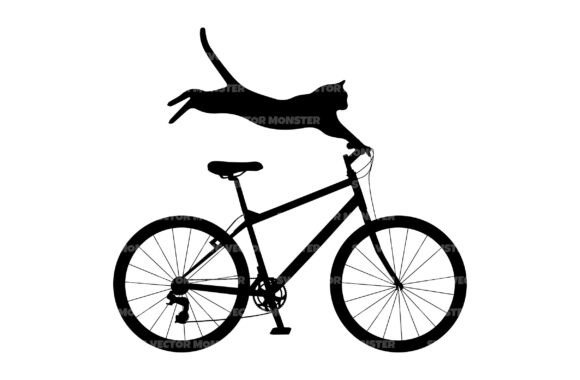
The moment you zoom in, Cat on Bike Svg feels intentionally uncluttered. The cat sits upright on a simple bicycle frame—no tiny spokes, no overlapping shadows, no fussy gradients. That’s a relief. As an embroidery designer, I know that clean outlines translate directly into crisp satin stitches and predictable fill areas. There’s enough personality in the cat’s posture and the bike’s slight tilt to read as joyful, not cartoonish—and crucially, it avoids visual noise that would blur when resized down for a 3-inch hoop or stretched across a 10-inch sweatshirt chest.
This isn’t a design built for photorealism. It’s built for recognition. At a glance, your customer sees “cat,” “bike,” and “fun”—not a puzzle of nested paths. That makes it ideal for handmade products where clarity matters more than complexity: think tea towels for a local café, personalized lunchbox patches for school kids, or baby onesie embroidery where softness and simplicity win every time.
Where It Shines (and Where It Needs Thought)
I tested Cat on Bike Svg across three real projects: a medium-weight canvas tote bag, a lightweight cotton baby bodysuit, and a structured twill cap. Here’s what stood out:
- Tote bags & aprons: Excellent. The balanced proportions hold up beautifully in a 4x4 hoop. Stitch density feels moderate—not so sparse it looks thin, not so dense it puckers natural fiber. On linen, it reads as polished, handmade, and intentional.
- Baby items & nursery decor: Works well *if* you simplify stitch types. The original vector has smooth curves that convert cleanly to satin stitch for the cat’s outline and gentle fill stitch for the bike frame—ideal for delicate fabrics. Just avoid tight corners on ultra-thin interlock; a light tear-away stabilizer keeps everything flat.
- Caps & curved surfaces: Proceed with care. The bike’s horizontal line runs close to the bottom edge—if placed low on a cap, it can distort. I recommend centering it higher or using it as a front-panel accent rather than a full-wrap motif.
Fabric & Function: What You’ll Want to Test First
Not all fabrics play nice with playful shapes. Here’s my shortlist of considerations before cutting thread:
- Stretchy knits (like t-shirt fabric): Use cutaway stabilizer underneath and reduce stitch density slightly—the bike’s long horizontal lines can pull if tension isn’t dialed in.
- Dark or textured fabrics: This design relies on shape, not contrast. Test thread colors in both black and cream against your base fabric. A single-tone stitch job can vanish on charcoal fleece unless you add a subtle outline or shadow layer.
- Small hoops (under 3 inches): The cat’s face details are minimal by design—which is smart—but if you shrink it below 2.5 inches, the eye and ear definition may soften. Keep it above 3 inches for patches or baby caps.
- Frequent-wash items (kitchen towels, kids’ clothes): Avoid overly dense fill areas. The current layout allows for breathable stitch placement—just confirm your machine’s fill angle doesn’t create rigid, inflexible zones.
Why Craft Business Owners Will Appreciate This One
If you sell on Etsy or run a small shop, Cat on Bike Svg quietly supports your brand—not just your inventory. Its friendly, gender-neutral vibe fits baby shops, pet boutiques, cycling studios, and even eco-conscious lifestyle brands. It’s easy to pair with neutral fonts for invitations or re-color for seasonal palettes (think mint and coral for spring, mustard and navy for fall).
More importantly, it avoids overused tropes. No cliché “meow” text, no glitter effects, no forced puns. That means your finished product feels curated—not clip-art. Customers notice that difference. They trust it more. And yes—it converts better in listings with clean, consistent mockups: try it on a natural-toned sweatshirt, a cream linen pillow cover, or a kraft-paper gift tag.
Practical Designer Notes Before You Stitch
Before committing to your first production run, do these five things:
- Run a test on scrap fabric *with your exact stabilizer and thread*. Watch how the bike’s wheel curve stitches—does it pull? Does the cat’s tail stay defined?
- Check contrast in grayscale mockups. If it disappears on dark backgrounds, add a subtle white underlay or adjust fill density.
- Confirm hoop size compatibility. While the vector scales freely, embroidery software may require manual adjustment for optimal stitch pathing.
- Inspect corners and joins. Clean vectors don’t always mean clean stitches—zoom in on the handlebar-to-frame junction and adjust pull compensation if needed.
- Review licensing terms carefully. Since Cat on Bike Svg is marketed for crafts and graphics, verify whether your intended use—like selling embroidered patches commercially or bundling it in a digital embroidery kit—falls within permitted scope.
Final Thought: Charm With Purpose
Cat on Bike Svg won’t replace your go-to monogram or heirloom floral—but it fills a specific, valuable gap: lighthearted, scalable, and genuinely stitch-friendly illustration for the modern craft business. It’s the kind of design that makes customers smile *and* makes your workflow smoother. Whether you’re prepping holiday gifts, building a boutique capsule collection, or sourcing fresh embroidery assets for your next Etsy launch, this one earns its place in your working library—not as filler, but as function with flair.