Construction Digger Bundle
A Designer’s First Look: Friendly, Bold, and Built for Real Projects
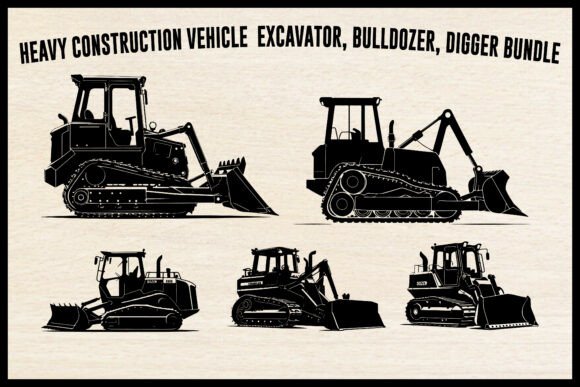
When I opened the Construction Digger Bundle, my first thought wasn’t “cute” or “trendy”—it was “this will hold up.” As someone who’s stitched hundreds of machine embroidery designs onto everything from baby onesies to boutique aprons, I appreciate when a set feels intentional—not just drawn, but *designed for stitch*. These six construction vehicle graphics—excavator, bulldozer, digger, tractor, earth mover, and heavy equipment—have clean outlines, balanced negative space, and a confident, grounded silhouette. They’re not overly detailed, which is smart: too many tiny lines or fussy curves spell trouble in satin stitch. Instead, they land somewhere between playful and professional—ideal for a dad’s personalized tote bag, a preschooler’s embroidered pillow cover, or a small shop’s line of nursery-themed tea towels.
Where It Shines: Sweatshirts, Patches, and Small-Business Merch
I tested one of the excavator designs on a midweight cotton sweatshirt—medium hoop, tear-away stabilizer, standard 40-weight thread—and it stitched cleanly in under 8 minutes. The fill stitch areas were dense enough to feel substantial, but not so heavy that the fabric puckered. That’s huge for craft business owners: consistent, reliable results mean fewer do-overs and faster turnaround for Etsy orders or craft fair prep. I also ran it as an applique design on denim—cutting the base shape, then stitching the outline with satin stitch—and the corners held crisp definition without fraying. For embroidered patches? Perfect. The bulldozer SVG scaled down to 2.5 inches without losing legibility, and the earth mover looked sharp even on a curved baseball cap brim (with light cutaway stabilizer underneath).
What stood out most was how well these translate to handmade presentation. A baby embroidery project—say, a soft cotton onesie with the little digger centered on the chest—feels thoughtful and gender-neutral, not gimmicky. Same goes for holiday embroidery: stitch one onto a linen kitchen towel as a “builder’s gift” for a contractor friend, and it reads as personal, not generic. That subtle professionalism builds customer trust—especially for Etsy sellers listing digital embroidery files or finished products. Buyers notice when a design looks like it was made *for* embroidery, not just adapted.
Where to Pause: Texture, Scale, and Fabric Choices
That said, not every surface is equal. On textured terry cloth (like a baby towel), the finer details—like the cab window or track links—softened slightly, though still readable. On thin, stretchy jersey, I’d recommend switching to a lightweight cutaway stabilizer and reducing stitch density if possible—though since the bundle only lists PNG, EPS, SVG, and JPG formats, you’ll need to confirm whether your embroidery software allows density adjustment before stitching. Also, avoid placing any of these near high-stress seams or curved hems unless you’ve tested them first; the tractor SVG’s wide wheelbase, for example, needs a flat, stable surface to anchor properly.
Dark fabric is no problem—the bold shapes pop beautifully in white or yellow thread—but keep contrast in mind for smaller items. A 1.75-inch digger on a toddler’s cap works, but the same size on a newborn onesie feels cramped. And while the bundle includes six distinct vehicles, none feature tiny lettering or fine linework, which is wise: those elements rarely survive washing or repeated wear in real-life finished product use.
Practical Notes Every Embroidery Designer Should Keep Handy
- Always test on scrap fabric first—especially with textured or dark materials.
- Check thread color contrast before committing to a full run; what reads well on screen may fade on navy fleece.
- Review stitch density visually in your embroidery software—look for overfilled zones that could cause stiffness or distortion.
- Confirm hoop size compatibility; the largest design in the bundle likely fits a 5x7 hoop, but verify before hooping.
- Inspect small details at 200% zoom—are corners sharp? Are inner cutouts (like cab windows) large enough to stitch cleanly?
- Test black-and-white mockups to assess visual weight and balance without color distraction.
- Compare performance on light vs. dark backgrounds—some shapes gain or lose clarity depending on contrast.
- Use proper stabilizer: tear-away for stable wovens, cutaway for knits or delicate fabrics.
- Verify licensing terms before selling finished embroidered items or reselling the digital embroidery file—this bundle is listed under Crafts and Graphics, but commercial rights aren’t stated outright.
Why This Bundle Fits Real Creative Workflows
The Construction Digger Bundle doesn’t try to be everything—it knows its lane. It’s not hyper-realistic. It’s not cartoonish. It’s clear, scalable, and built for repetition: think custom apparel batches, seasonal nursery decor, or branded merchandise for a small construction-themed shop. As a designer, I value that restraint. When I’m prepping for a client who wants “something for their builder husband’s birthday,” I don’t reach for complex scenes—I reach for strong, recognizable icons that stitch fast and sell well. That’s exactly where this bundle delivers.
It also supports versatility across digital and physical workflows. The included SVG and EPS files make quick work of printable mockups for Etsy listings or social media previews. The PNGs are crisp for web thumbnails. And because each vehicle stands alone, you can mix and match—pair the excavator with a “Daddy’s Digging Crew” text file (just make sure your text design has compatible stitch logic) or use the bulldozer solo on a minimalist patch.
In short: if your craft business thrives on dependable, on-brand, stitch-ready design assets—and you serve customers who value handmade authenticity over mass-produced flash—Construction Digger Bundle earns its place in your working library. Not as filler. Not as trend bait. But as a quiet, capable tool you’ll reach for again and again.