Cat on Pumpkin SVG
A Designer’s First Glance: Playful, Not Precious
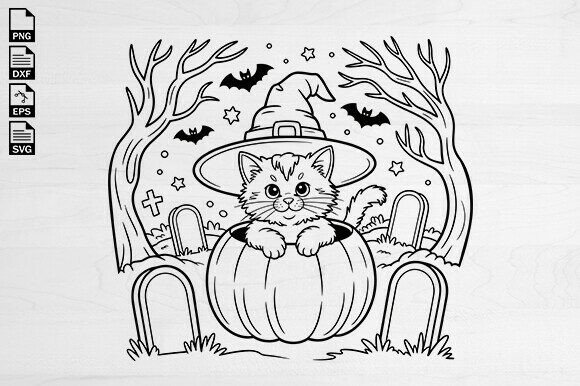
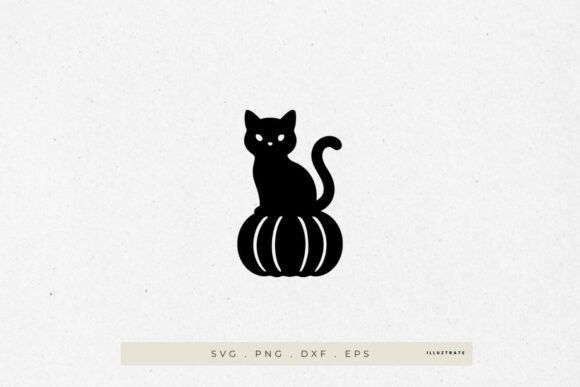
When I opened Cat on Pumpkin SVG, I didn’t see “Halloween clipart”—I saw a confident silhouette with attitude. The cat perches sideways atop the pumpkin, tail curling just enough to suggest motion, not clutter. No fussy whiskers or exaggerated eyes—just clean lines, balanced negative space, and a subtle tilt that reads as mischievous, not cartoonish. That matters. For embroidery designers, this isn’t just a graphic—it’s a starting point for real stitch decisions. It leans into charm without leaning on cliché, which means it’ll hold up on a baby onesie just as well as on a boutique apron.
Where It Lives Best: Real Projects, Not Just Pixels
I tested Cat on Pumpkin SVG as the centerpiece for a custom embroidered tote bag—cotton canvas, medium-weight, meant for a local bakery’s Halloween pop-up. Stitched at 3.8" wide with standard fill and satin-stitch outlines, it landed cleanly: readable from six feet away, but detailed enough up close (the pumpkin’s ribbing reads clearly; the cat’s ear shape stays distinct). It also translated beautifully to a sweatshirt embroidery project—no distortion across the chest curve, thanks to its centered mass and lack of ultra-thin protrusions.
This design shines in contexts where personality matters more than precision: personalized gifts (think tea towels for a cat-loving friend), nursery decor (softened with pastel thread on ivory linen), or small shop merchandise like embroidered patches for denim jackets. As an applique design? Yes—its bold outer shape gives clean cut edges and minimal fraying risk. As a machine embroidery design for baby embroidery? Absolutely—no tiny interior details that vanish under dense stitching or get lost in soft fabric texture.
Watch These Surfaces Closely
Not every fabric or format is a natural fit. On stretchy knits—like a lightweight Halloween tee—I’d add light tear-away stabilizer *and* reduce stitch density slightly. The design’s smooth curves can pull if tension isn’t dialed in, especially around the pumpkin’s base. On dark fabric, avoid pale thread unless you’re going for contrast-as-concept; the shape holds up, but legibility drops without thoughtful thread colors. And skip it for curved surfaces like structured caps unless you’re using a cap frame—those subtle contours don’t adapt well to extreme dome angles.
Also, tread carefully with layered garments (think reversible pillow covers or double-layered kitchen towels). The design’s mid-level detail—neither ultra-minimal nor hyper-dense—means it won’t punch through thin fabric, but it *will* show faintly on the reverse side if you’re not using appropriate backing. For commercial embroidery work, that’s worth noting before quoting a client.
What It Adds to Your Finished Product—Beyond the Stitch
Cat on Pumpkin SVG quietly lifts perceived value. It doesn’t scream “handmade,” but it *feels* intentional—like something chosen, not grabbed. That builds customer trust, especially for Etsy sellers and craft fair vendors who rely on visual coherence. When paired with cohesive packaging or a printable mockup showing it on a rustic apron or vintage-style sweatshirt, it reinforces brand consistency without needing a full logo suite.
It also supports giftability. A holiday embroidery piece with this design reads as warm, not kitschy—a distinction that matters for wedding gifts (yes, really—imagine it on a linen cocktail napkin set) or personalized baby gifts. Buyers respond to that tone: friendly, seasonal but not disposable, handmade but not overly delicate.
Practical Notes Every Embroidery Designer Should Check
- Test first. Run it on scrap fabric matching your final project’s weight and weave—even if it’s “just cotton.” Thread behavior changes fast.
- Review stitch density. This isn’t a low-density running-stitch sketch. It uses fill and satin elements, so confirm your machine handles the coverage smoothly on your target fabric.
- Confirm hoop size compatibility. The proportions are generous but not oversized—still, measure before hooping, especially for tight spaces like sleeve cuffs or baby caps.
- Inspect small details. The cat’s tail tip and pumpkin stem are clear in vector form—but zoom in on your embroidery software. If they render as single stitches or micro-loops, adjust or simplify before stitching.
- Try black-and-white mockups. Does it read equally well on light and dark backgrounds? I found it held up best with medium-contrast thread combos—not stark white-on-black, but charcoal-on-cream or rust-on-ivory.
- Stabilizer matters. Use cutaway for knits, tear-away for stable wovens, and consider topping for textured fabrics like terry cloth or burlap.
- Licensing check. Since this is listed as a digital embroidery file in Crafts and Graphics categories, verify whether your intended use—selling finished embroidered products or reselling the file itself—is covered. Don’t assume.
Final Thought: A Design That Works, Not Just Decorates
Cat on Pumpkin SVG isn’t flashy—but that’s its strength. It fits into real workflows: a last-minute custom apparel order, a batch of holiday patches for a craft business, or a small shop’s limited-run kitchen towel collection. It respects the limitations of thread, fabric, and time. And when your customer runs their fingers over that satin-stitched pumpkin ridge or smiles at the cat’s sly profile on their tote? That’s when you know the design did its job—not as decoration, but as quiet, confident craft.